Is British Shorthair Sedentary Behaviour Normal? What the Research Says
British Shorthair sedentary behaviour is breed-typical — but low activity creates real obesity risks. Learn what the research says and what to watch for.
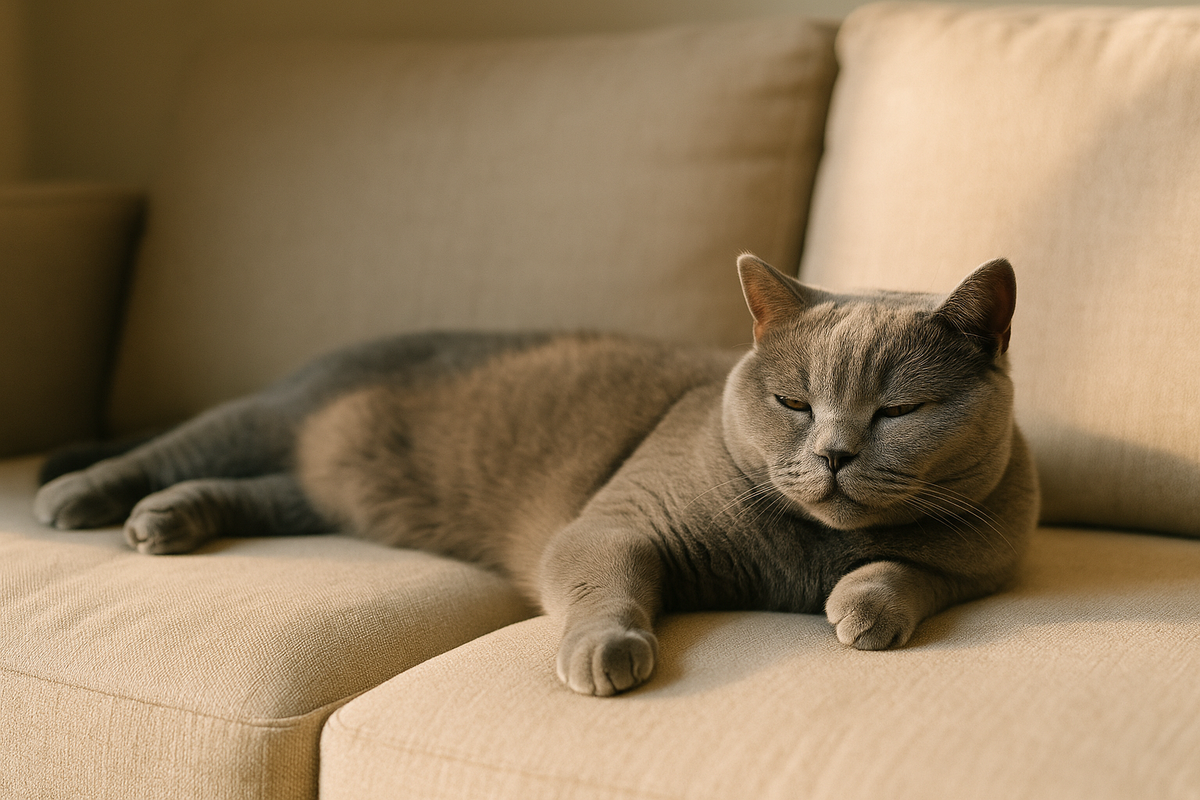
The Worry
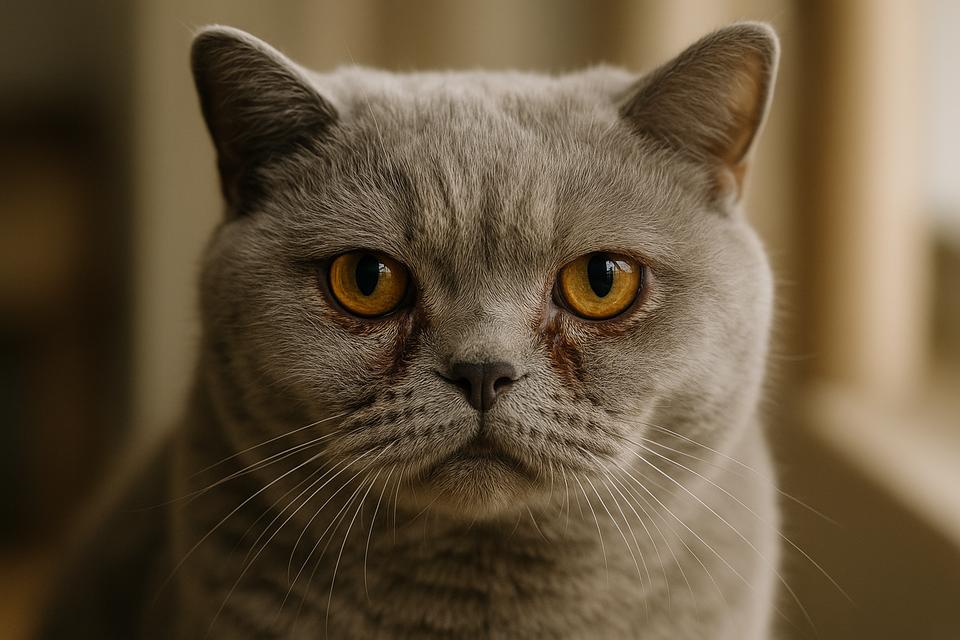
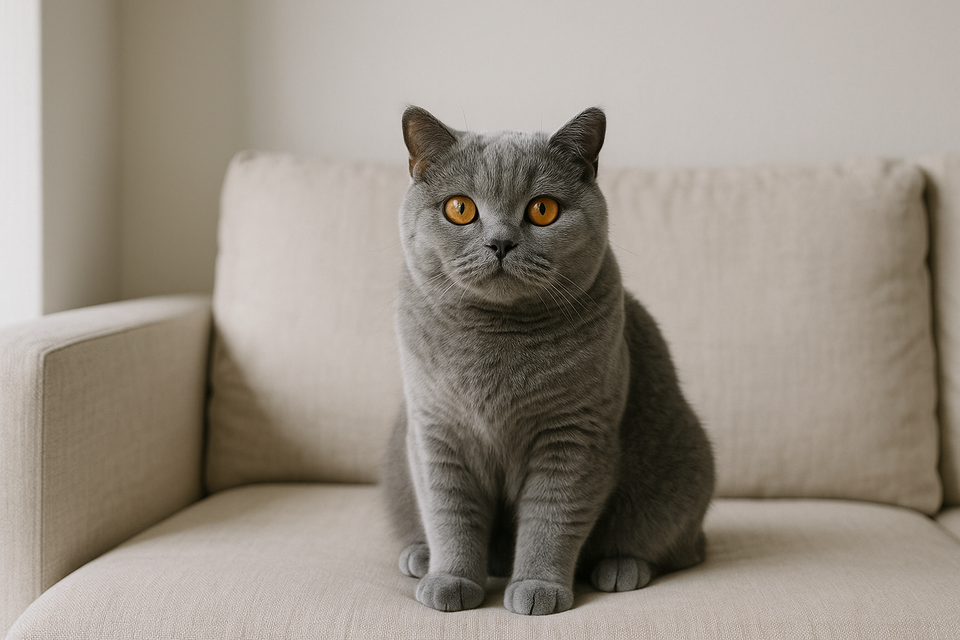
You watch your British Shorthair settle into the sofa for the fourth hour in a row and start wondering. Other cats you've seen seem lively, curious, always into something. Yours? They greet you at the door and immediately return to the armchair, like they've made a permanent life decision.
It's 11pm and you're searching "is my British Shorthair lazy" on your phone, half-worried it's nothing, half-certain something is wrong. Questions spiral: are they depressed? Bored? In pain and hiding it? The stillness feels too still. British Shorthair sedentary behaviour is one of the most common concerns owners raise — and the anxiety is understandable. From the outside, you genuinely cannot tell whether that calm presence is contentment or a warning sign you're missing.
The short answer: for most British Shorthairs, this is normal. But there is an important distinction, and one risk that is easy to overlook.
British Shorthair Sedentary Behaviour: What the Science Shows
Research is consistent. British Shorthairs rank among the least active domestic cat breeds. A large study of 5,726 cats across 40 breeds found that activity level clusters along genetic lines — with British Shorthairs, Ragdolls, and Saint Birmans among the quietest, and Bengals, Cornish Rex, and Korat among the most active. Activity level shows moderate-to-high heritability across the breeds studied, meaning a low-activity British Shorthair is not a lazy cat — it is a cat that inherited a calm disposition, in the same way other traits are inherited (Salonen et al., 2019).
Indoor living compounds this further. A controlled study comparing indoor and outdoor cats found that indoor cats cover roughly 2.33 km per day on average, compared to 4.29 km for outdoor cats — less than half the distance. Critically, activity peaks in indoor cats correlate directly with human presence and interaction, not with independent exploration. British Shorthairs are overwhelmingly kept indoors, and for an already-calm breed, the indoor environment removes most of the triggers that might otherwise drive movement (Parker et al., 2022).
Age matters too. Accelerometer monitoring in client-owned cats shows that physical activity and jump frequency decline measurably with age, while resting time increases. This is normal. However, the same research found that reduced jumping ability was present in 71% of cats with joint disease — often without any visible signs of pain. The key distinction: a cat that has always been calm is one picture. A cat that was previously more active and has recently become quieter is a different one (Yamazaki et al., 2020).
The fourth finding explains why sedentary behaviour is normal but not entirely harmless. A 10-year veterinary clinical study of Australian British Shorthairs found 47.7% of adults were overweight. Among kittens who carried excess weight in their first year, the data was stark: median survival of approximately 6.6 years, compared to 12.3 years for lighter kittens. A calm, low-activity cat that is overfed faces a significantly shortened life (Murphy, Stevenson & Mansfield, 2023).
What This Means in Practice
A British Shorthair that sits still for much of the day is not broken. What matters is your cat's individual baseline — and whether that baseline is changing.
If they have always been calm and low-energy: this is their nature. The research does not support trying to reshape a British Shorthair into a high-activity breed. The calm temperament that makes British Shorthairs distinctive is genetically rooted — not a problem to be corrected. Your quiet cat is doing exactly what a British Shorthair is supposed to do.
If your cat was previously more engaged — jumping to familiar spots, responding more readily to play, seeking you out — and has become noticeably quieter, that is worth a vet conversation. Cats with joint pain rarely limp or vocalise. They go still. The shift is what matters: a cat that stopped jumping where they always jumped. A cat that used to meet you at the door but now stays curled up. That change from their normal is the signal to act on; the normal itself is not. A vet can rule out joint pain, cardiac issues (British Shorthairs are predisposed to heart disease), or other treatable causes before you assume it's just "more of the same settling."
The weight risk is where accepting sedentary behaviour without active management becomes genuinely dangerous. British Shorthairs are highly prone to becoming overweight, and their low-activity profile means caloric balance requires real attention. A relaxed temperament combined with unrestricted access to food is a higher-risk combination in this breed, not a neutral one.
One more thing — and this is worth emphasizing because it feels counterintuitive: you are your indoor cat's primary source of activity. Not the toys in the corner, not a new cat tree. You. Human presence and interaction directly drive the activity peaks observed in indoor cats. Even short, consistent play sessions — two or three per day, five to ten minutes — make a meaningful difference. Interactive play is not optional enrichment; it is the difference between activity and near-total stillness. Leaving toys out and hoping your cat entertains themselves is not the same thing as being in the room playing with them.
Concrete Actions
-
Establish your cat's baseline now. Note how often they jump, where they tend to rest, how they respond to play, whether they seek you out. You need this reference point to recognise a meaningful change if one occurs. Take a mental snapshot or even jot it down. This becomes your early warning system.
-
Schedule two to three play sessions per day. Wand toys or a laser for five to ten minutes each session. Consistency matters more than duration — you are more effective than any unattended toy. This is not something you can optimize away or replace with a toy. It requires your presence and your participation. If this feels like a lot, start with one dedicated session and build from there. You'll notice the difference quickly.
-
Weigh your cat monthly and track it. Nearly half of adult British Shorthairs are overweight. Given the survival data (kittens carrying excess weight face a median lifespan of 6.6 years versus 12.3 for lighter cats), this is not a cosmetic concern. If your cat is gaining weight, adjust food portions first rather than relying on activity to correct the balance.
-
Watch for changes from their individual baseline. If your cat stops jumping to usual spots, disengages from play they previously enjoyed, or becomes reluctant to move, treat it as a possible pain signal and book a vet check. Do not wait to see whether it passes on its own. A vet can establish mobility and rule out early joint disease or other issues.
-
Raise cardiac screening at your next vet visit. British Shorthairs have a known predisposition to hypertrophic cardiomyopathy (HCM). Reduced activity can be an early sign of cardiac strain. If your cat is due for a routine check-up, ask your vet directly about cardiac assessment.
What We Still Don't Know
No published research has established breed-specific activity norms for British Shorthairs. There is no evidence-based answer to "how many hours per day should a British Shorthair be active." All objective indoor cat activity data comes from mixed-breed or other-breed populations — no studies have measured BSH activity specifically using accelerometers.
Whether enrichment strategies — puzzle feeders, vertical space, interactive toys — can durably increase activity in British Shorthairs is also unresolved. The logic is reasonable, but it has not been tested in this breed.
The link between BSH's low-activity profile and their obesity rate is plausible but not mechanistically confirmed. The Murphy (2023) survival data shows a correlation between early excess weight and shortened lifespan — but correlation is not a proven causal chain, and confounding factors may be present.
Finally, whether desexing has a disproportionate effect on activity in already-low-activity British Shorthairs compared to more active breeds remains unknown.
Sources
-
Salonen M, Vapalahti K, Tiira K, Mäki-Tanila A, Lohi H. Breed differences of heritable behaviour traits in cats. Scientific Reports. 2019;9:7949. https://doi.org/10.1038/s41598-019-44324-x
-
Parker M, Serra J, Deputte BL, Ract-Madoux B, Faustin M, Challet E. Comparison of Locomotor and Feeding Rhythms between Indoor and Outdoor Cats Living in Captivity. Animals (Basel). 2022;12(18):2440. https://doi.org/10.3390/ani12182440
-
Yamazaki A, Edamura K, Tanegashima K, Tomo Y, Yamamoto M, Hirao H, Seki M, Asano K. Utility of a novel activity monitor assessing physical activities and sleep quality in cats. PLoS One. 2020;15(7):e0236795. https://doi.org/10.1371/journal.pone.0236795
-
Murphy BJ, Stevenson MA, Mansfield CS. Bodyweight and body condition scores of Australian British shorthaired cats, 2008–2017. Frontiers in Veterinary Science. 2023;10:1241080. https://doi.org/10.3389/fvets.2023.1241080
If your British Shorthair's inactivity is accompanied by weight gain, our British Shorthair feeding guide can help you adjust portion sizes and meal frequency to keep your cat at a healthy weight.
If you have concerns about your British Shorthair's health, consult your vet. This article is informational only.