Is My British Shorthair's Breathing Normal?
British Shorthairs are mildly brachycephalic — snorting and snuffling sounds can be a sign of BOAS. Learn what the research says and when to see a vet.
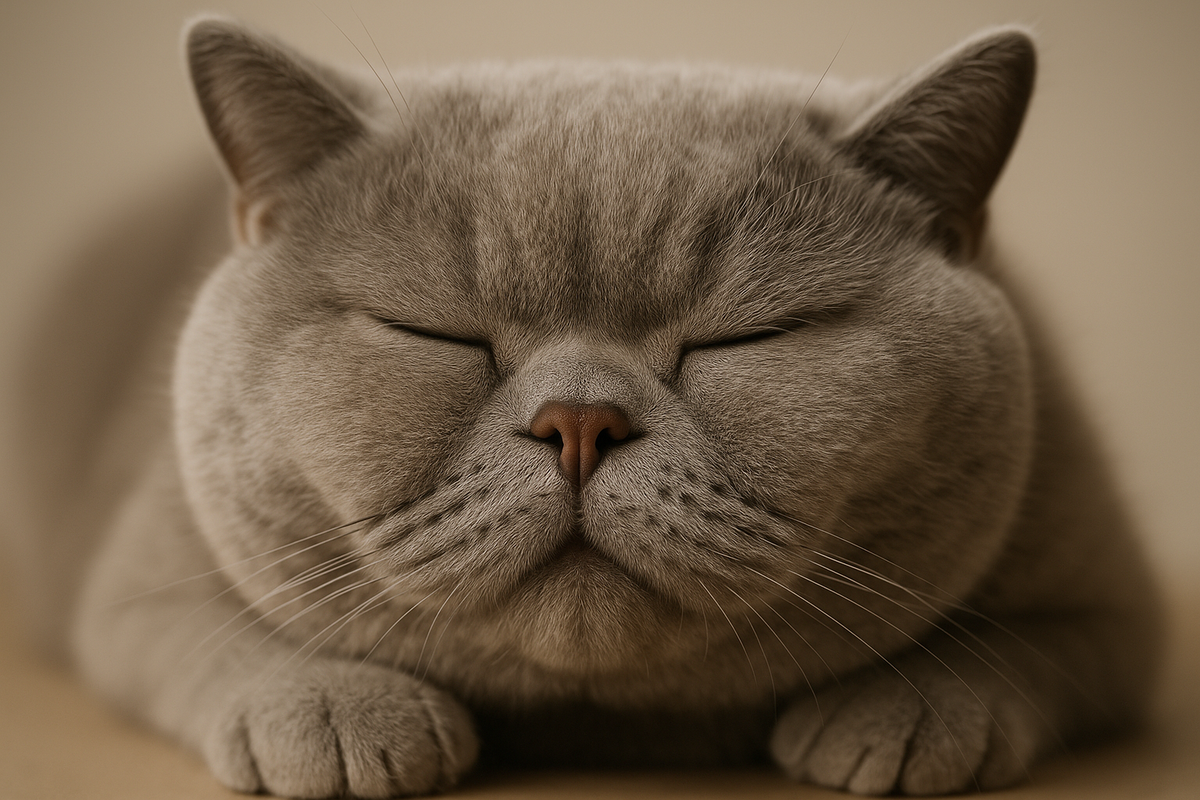
You've noticed it — that snort when your cat settles into their favourite spot, the wet snuffle as they explore the kitchen counter, the faint rattling sound they make breathing in their sleep. Maybe you woke at 3am to the sound of your British Shorthair breathing hard in the dark, and found yourself wondering if you should be worried. Maybe it's a sound you'd heard for months before a vet visit made you realise it wasn't normal. You've probably wondered if this is just how British Shorthairs sound, or if something is wrong.
British Shorthair breathing problems are more common than most owners expect, and the sounds you're hearing are not something to dismiss. That snorting is not a personality quirk. It is your cat's airway working harder than it should to move air through a narrowed passage. Understanding why it happens — and what to do about it — starts with understanding the kind of breed you have.
Understanding British Shorthair Breathing Problems: The BOAS Connection
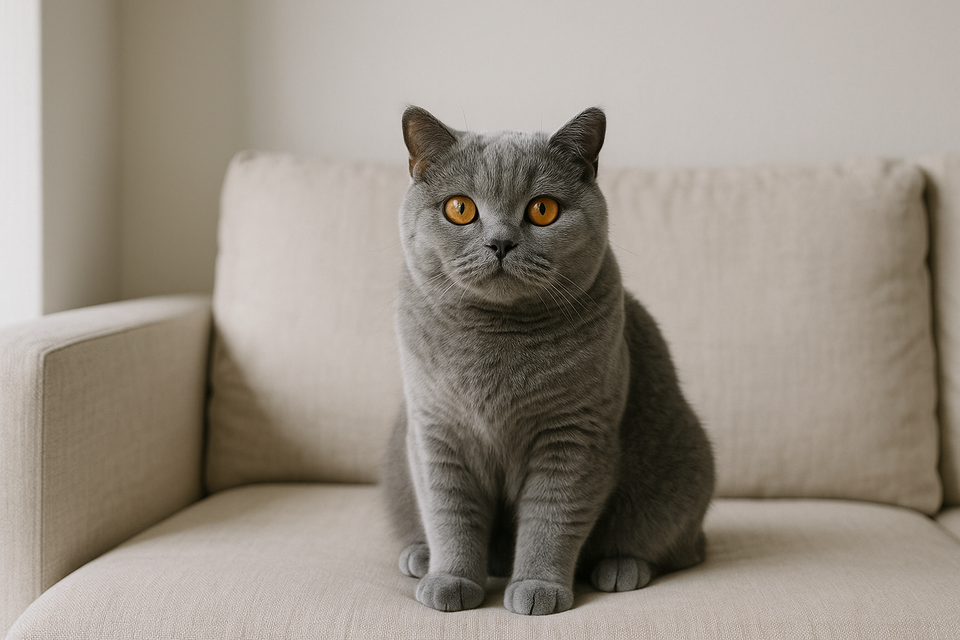
British Shorthairs are a brachycephalic breed. That word — from the Greek for "short-headed" — describes cats whose skulls are shaped in a way that results in a flatter face, a shorter nose, and an upper airway that does not always function as efficiently as in a longer-nosed cat. A genome-wide association study of over 800 cats across 14 breeds confirmed that British Shorthairs share brachycephalic genetic signatures with Persians — specifically variants in the CHL1 and CNTN6 genes that determine face shape modification (Bertolini et al., 2016).
That face shape has a name for what it can cause: Brachycephalic Obstructive Airway Syndrome, or BOAS. This is a well-recognised condition in flat-faced cats characterised by multilevel obstruction of the upper airway (Dupré & Heidenreich, 2016). The snorting and snuffling sounds owners notice are audible signs of increased respiratory effort — the cat working harder than it should need to in order to breathe.
What narrows the airway? The most common structural problem is stenotic nares — nostrils that are too narrow to allow adequate airflow. In cats, this has a species-specific cause: not cartilage deviation (as in flat-faced dogs) but a redundant skin fold at the junction of the ventral floor of the nostril and the haired skin of the lip. Multiple independent surgical groups have documented this finding consistently across a total of 15 brachycephalic cats (Berns et al., 2020; Rahimdoust Mozhdehi et al., 2023; Chen & Chang, 2023). Other contributing structures include an elongated soft palate — which can, in severe cases, cause secondary pulmonary oedema (Corgozinho et al., 2012) — and, in some cats, elongation of the dorsal lateral nasal cartilage.
Is this common? A 2023 survey of 278 owners of brachycephalic cats (Persian and Exotic Shorthair) found that respiratory disease was the most frequently reported health problem in their pets — and that most owners were not aware of how prevalent these issues are in their breeds (Berteselli et al., 2023). Animal welfare researchers have described BOAS as a condition that "increases respiratory effort at rest and likely leads to air hunger during exertion," with air hunger recognised in human medicine as among the most distressing forms of breathlessness (Beausoleil & Mellor, 2015). A 2010 paper described extreme brachycephalic breeding as "seriously affecting animal health and welfare" (Oechtering et al., 2010).
Does BOAS cause real, measurable harm? Yes. A 2026 study using non-invasive whole-body breathing measurement compared 18 brachycephalic cats to 25 non-brachycephalic controls. Brachycephalic cats moved significantly less air per minute (median 311 vs 503 mL/kg/min, p=0.01) and showed substantially elevated airway obstruction indices (Penh: 2.37 vs 0.53, p<0.001) (Chen CR et al., 2026). The snorting you hear represents a real, measurable reduction in respiratory function — not just a sound.
A note on the evidence. Virtually all feline BOAS research has been conducted in Persian and Exotic Shorthair cats, not British Shorthairs. British Shorthairs are mildly brachycephalic — their faces are less compressed than Persians, and their risk of clinically significant BOAS is likely lower. But they share the genetic basis for brachycephalic conformation, and they can and do develop BOAS. No study has yet measured BOAS prevalence or severity specifically in British Shorthairs. The survey showing widespread owner unawareness (Berteselli et al., 2023) also studied Persian and Exotic Shorthair owners; British Shorthair owner awareness may differ.
What This Means for Your Cat
Snorting and snuffling are signs, not a diagnosis. The sounds you hear could indicate clinically significant airway obstruction, or they could represent mild narrowing that your cat manages without substantial difficulty. Severity cannot be determined from sound alone. A vet can assess it directly.
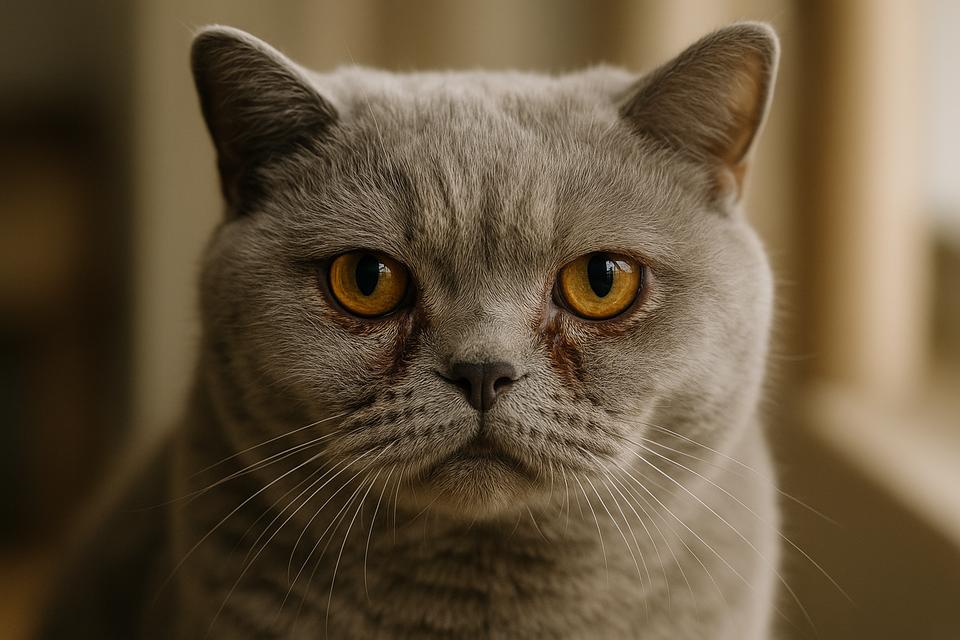
Look at the nostrils. Healthy cat nostrils are roughly rounded and open. Stenotic nares look like narrow vertical slits. If your British Shorthair's nostrils appear obviously constricted, that is worth discussing with a vet. If you are unsure, a vet can assess this quickly during a physical examination.
Weight is a compounding factor. The direct relationship between obesity and brachycephalic airway obstruction has not been studied specifically in British Shorthairs, but excess body weight is known to worsen breathing function in brachycephalic animals generally. British Shorthairs are already prone to weight gain — research shows 48% of the breed is overweight (see our guide to whether your British Shorthair is overweight).
A cat managing a narrowed airway while also carrying excess weight is under compounded pressure. This is one reason British Shorthair sedentary behaviour warrants attention: a cat that moves little may gain weight without the usual warning sign of obvious exercise intolerance.
BOAS can worsen. Breathing difficulties can escalate with heat, vigorous play, stress, or weight gain. A cat that copes adequately at rest may struggle significantly in warm weather or during excitement.
Surgery, where indicated, works. For cats with confirmed stenotic nares, surgical correction has a consistent track record. A study of 37 brachycephalic cats that underwent stenotic nares surgery found respiratory signs improved in all cats after the procedure, with 83.8% of owners reporting improved quality of life (Thouvenot Oudart et al., 2026). Smaller case series from independent groups have reported similar outcomes (Rahimdoust Mozhdehi et al., 2023; Chen & Chang, 2023; Berns et al., 2020). Surgery is not indicated for every cat with noisy breathing — many mild cases are managed conservatively with weight control and environmental modifications.
What to Do
-
Watch breathing at rest. Quiet, effortless breathing in a relaxed cat is normal. If you regularly see your British Shorthair's sides heaving, their abdomen visibly moving with each breath, or if they ever breathe through their mouth, treat these as signs requiring prompt veterinary attention.
-
Examine the nostrils. Look for slit-like, narrow openings rather than rounded, open ones. If the openings look constricted, book a vet appointment.
-
See a vet for a BOAS assessment. A vet can evaluate the degree of airway obstruction, check for stenotic nares, elongated soft palate, and related structures, and tell you whether what you're hearing is clinically significant or within an acceptable range for a mildly brachycephalic cat.
-
Manage your cat's weight. Keeping your British Shorthair at a healthy body weight is one of the most effective ways to reduce any breathing burden. Our British Shorthair feeding guide covers portion sizing and feeding approach to prevent the weight gain this breed is prone to.
-
Keep them cool. In warm weather, keep your cat in a shaded, well-ventilated space. Avoid vigorous play during the hottest parts of the day.
-
Know the emergency signs. Open-mouth breathing, blue or grey gums, and sudden collapse require immediate emergency veterinary care.
-
Flag brachycephalic status before any anaesthetic. Brachycephalic cats carry additional risk during sedation and general anaesthesia. Before any procedure that requires a general anaesthetic — including spaying, neutering, or dental work — make sure your vet knows your cat is a British Shorthair and ask what brachycephalic precautions they follow.
What We Still Don't Know
No study has yet measured BOAS prevalence specifically in British Shorthairs. All feline BOAS data — prevalence figures, surgical outcomes, objective breathing measurements — comes from Persian and Exotic Shorthair populations. Whether British Shorthairs have a different risk profile, severity range, or progression pattern than Persians has not been investigated.
We do not know what proportion of British Shorthairs have clinically significant stenotic nares versus mild narrowing that does not affect function. No breed-specific respiratory grading system exists for British Shorthairs, and the long-term outcome of untreated mild BOAS in this breed is unknown — whether it progresses, stabilises, or resolves has not been studied.
The interaction between obesity and brachycephalic airway obstruction in British Shorthairs has not been investigated directly. Given that nearly half the breed is overweight and that excess weight is known to compound respiratory impairment in brachycephalic animals, this is a meaningful gap. Similarly, no comparative study has examined whether British Shorthairs face different anaesthetic risks than non-brachycephalic cats during routine procedures.
Sources
- Bertolini F, Gandolfi B, Kim ES, et al. Evidence of selection signatures that shape the Persian cat breed. Mammalian Genome. 2016;27(3-4):144–155. DOI: 10.1007/s00335-016-9623-1. PMID: 26956354.
- Dupré G, Heidenreich D. Brachycephalic Syndrome. Veterinary Clinics of North America: Small Animal Practice. 2016;46(4):691–707. DOI: 10.1016/j.cvsm.2016.02.002. PMID: 27012936.
- Berns CN, Schmiedt CW, Dickerson VM, et al. Single pedicle advancement flap for treatment of feline stenotic nares: technique and results in five cases. Journal of Feline Medicine and Surgery. 2020;22(12):1238–1242. DOI: 10.1177/1098612X20910539. PMID: 32175790.
- Rahimdoust Mozhdehi N, Salari Sedigh H, Kazemi Mehrjerdi H. Surgical correction of stenotic nares using a single pedicle advancement flap technique in three brachycephalic cats. Veterinary Medicine and Science. 2023;9(6):2410–2413. DOI: 10.1002/vms3.1309. PMID: 37897212.
- Chen YC, Chang YS. A novel surgical approach for feline stenotic nares: Bilateral wedge resection of the dorsal lateral nasal cartilage in seven cases. Veterinary Medicine and Science. 2023;9(6):2430–2437. DOI: 10.1002/vms3.1302. PMID: 37842865.
- Berteselli GV, Palestrini C, Scarpazza F, et al. Flat-Faced or Non-Flat-Faced Cats? That Is the Question. Animals. 2023;13(2):206. DOI: 10.3390/ani13020206. PMID: 36670746.
- Plitman L, Černá P, Farnworth MJ, et al. Motivation of Owners to Purchase Pedigree Cats, with Specific Focus on the Acquisition of Brachycephalic Cats. Animals. 2019;9(7):394. DOI: 10.3390/ani9070394. PMID: 31252697.
- Beausoleil NJ, Mellor DJ. Introducing breathlessness as a significant animal welfare issue. New Zealand Veterinary Journal. 2015;63(1):44–51. DOI: 10.1080/00480169.2014.940410. PMID: 25004795.
- Oechtering GU, Schlüter C, Lippert JP. Brachycephaly in dog and cat: a "human induced" obstruction of the upper airways. Pneumologie. 2010;64(7):450–452. DOI: 10.1055/s-0030-1255513. PMID: 20632241.
- Chen CR, Caro-Vadillo A, Montoya-Alonso JA, et al. Characterization of Brachycephalic Obstructive Airway Syndrome in Cats Using Barometric Whole-Body Plethysmography. Animals. 2026;16(6):959. DOI: 10.3390/ani16060959. PMID: 41897936.
- Thouvenot Oudart E, Le Boedec K, Poncet C. Stenotic nares treatment in 37 brachycephalic cats by ala vestibuloplasty: 2017–2025. Journal of Feline Medicine and Surgery. 2026;28(5). DOI: 10.1177/1098612X261440977. PMID: 41889345.
- Corgozinho KB, Pereira AN, Cunha SC, et al. Recurrent pulmonary edema secondary to elongated soft palate in a cat. Journal of Feline Medicine and Surgery. 2012;14(6):417–419. DOI: 10.1177/1098612X12442024. PMID: 22398461.
If you have concerns about your British Shorthair's health, consult your vet. This article is informational only.
Featured Image Brief
- Subject: British Shorthair cat with characteristic flat face, in close-up, highlighting the nose and nostril area, resting comfortably
- Style: photo-realistic, editorial photography
- Dimensions: 1200×630px
- Alt text: British Shorthair cat with brachycephalic face shape showing characteristic flat nose structure
- Caption: British Shorthairs are a mildly brachycephalic breed — their distinctive face shape can affect breathing.