British Shorthair Heart Disease (HCM): What the Gene Test Won't Tell You
British Shorthair heart disease (HCM) affects 1 in 12 cats, males 10× more often. The gene test won't help — here's what actually will.
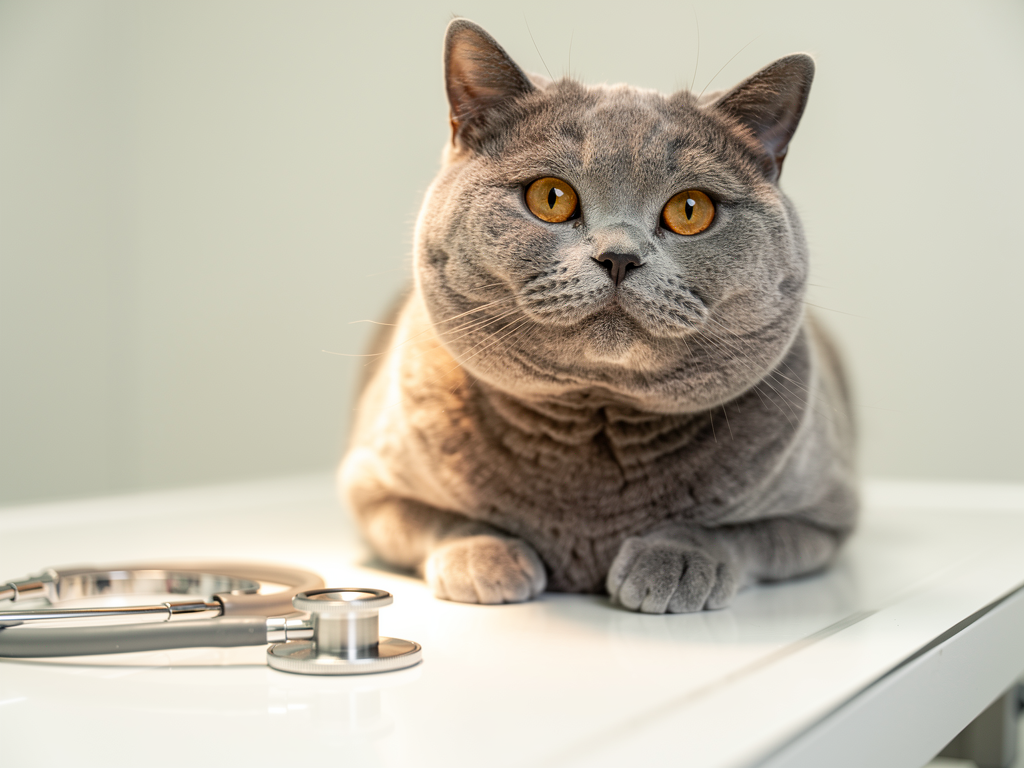
You've been Googling at some point in the last hour about British Shorthair heart disease. Maybe someone in a breed group mentioned HCM. Maybe your vet said the words "breed predisposition" and your stomach dropped. Maybe you just want to know if the worry is warranted before your next appointment.
It is warranted. About 1 in 12 British Shorthairs will develop hypertrophic cardiomyopathy — a form of heart disease that can progress silently for years. If your cat is male, the odds are roughly ten times higher than for a female. You are not catastrophising.
But here is what catches many owners completely off guard: the HCM gene test that vets and breeders routinely offer tells you almost nothing about a British Shorthair's actual heart health. A negative result is not reassurance. Understanding why is the most important thing you will take from this article.
What Is HCM?
Hypertrophic cardiomyopathy (HCM) is a disease in which the heart muscle thickens, reducing the heart's ability to pump blood efficiently. It is the most common heart disease in cats. In mild cases it can be asymptomatic for years; in advanced cases it can lead to congestive heart failure, life-threatening blood clots, or sudden death. The dangerous part is exactly that silence: many cats with HCM show no visible signs until the disease is already well advanced.
How Common Is British Shorthair Heart Disease?
In a four-year prospective study of 329 British Shorthairs in Denmark, researchers performed echocardiographic screening — a heart ultrasound — and found that approximately 8.5% of British Shorthairs developed HCM (Granström et al., Journal of Veterinary Internal Medicine, 2011). That is roughly 1 in 12 cats.
When sex is factored in, the picture sharpens. In that cohort of breeding and show-line British Shorthairs, males had an HCM rate of 20.4%, compared with 2.1% in females — an odds ratio of 7.89. Roughly one in five unscreened males in that population developed the condition. That is not a marginal risk.
Two honest caveats from the research: the Granström cohort drew from Danish breeding and show cats, which may represent a genetically selected population. The true prevalence in general British Shorthair pet cats has not been established. It is also worth being clear that 91.5% of cats in that study were HCM-negative — this is not an inevitable disease. What the data tells you is that the risk is real, that it is higher than owners typically expect, and that it falls disproportionately on males.
What the Gene Test Actually Tests — And Why It Doesn't Apply to British Shorthairs
Your breeder may have paperwork showing your cat tested "clear" for HCM. That result, for a British Shorthair, provides no reassurance about heart health.
The commercial HCM gene test screens for two specific mutations: A31P, found in Maine Coons, and R820W, found in Ragdolls. Both mutations cause HCM in their respective breeds. Neither has been found to cause HCM in British Shorthairs.
The research on this is consistent. A variant called A74T does exist in the MYBPC3 gene in British Shorthairs, but it is not associated with HCM phenotype in this breed — cats with and without A74T develop the condition at similar rates (Longeri et al., JVIM, 2013). A separate study screened eight sarcomeric genes — the family of genes known to cause inherited heart muscle disease — and found no pathogenic variant in British Shorthairs (Meurs et al., JVIM, 2009).
If you have that "clear" result in your hand right now, this is the part where the research says what you probably hoped it wouldn't: it doesn't mean your cat is safe. The most direct confirmation comes from a 2021 study of 103 non-Maine Coon, non-Ragdoll cats with confirmed HCM: every single one tested wild-type — negative on all known HCM genetic variants — yet all had the disease (O'Donnell et al., Animal Genetics, 2021). The ACVIM (the cardiology professional body) stated this plainly in their 2020 consensus guidelines: genetic testing is not recommended for British Shorthairs (Fuentes et al., JVIM, 2020).
To be clear: the gene test is genuinely useful for Maine Coons and Ragdolls, where causative mutations are known. The problem is not the test — it is applying it to a breed where the genetic cause of HCM is still completely unknown.
For a British Shorthair, a "clear" result means only that your cat does not carry the Maine Coon or Ragdoll mutation. It says nothing about whether your cat will develop HCM.
How Do You Actually Find Out If Your Cat Has HCM?
There is one reliable answer: echocardiography — a cardiac ultrasound performed by a veterinary cardiologist. An echo is the only tool that can detect HCM in a British Shorthair. There is no blood test, no gene test, and no routine physical examination finding that substitutes for it.
The ACVIM consensus guidelines recommend annual echocardiographic screening for cats from breeds with known HCM prevalence, and British Shorthairs are explicitly included (Fuentes et al., JVIM, 2020). The reason this matters is that HCM is frequently asymptomatic in its early stages. A cat can have significant heart muscle thickening and look and behave entirely normally. Waiting for symptoms is not a management strategy; by the time symptoms appear, the disease has often already progressed significantly.
When to act: 1. Annual echocardiographic screening for British Shorthairs, particularly males 2. Echocardiography at the time of purchase, especially for breeding cats 3. Immediate veterinary evaluation if you notice: rapid or laboured breathing, open-mouth breathing at rest, weakness or dragging in the hind limbs, or sudden collapse
One important point: a normal echo today is not a permanent all-clear. HCM is age-dependent — risk increases as cats get older — so screening should continue through your cat's life, not stop after one clean result.
Speak to a veterinary cardiologist about echocardiographic screening. This is the single concrete step this article can give you, and it is the right one.
If you're also thinking about whether your British Shorthair is overweight — maintaining a healthy weight supports overall cardiovascular health and is worth addressing alongside cardiac screening.
What the Research Does Not Yet Tell Us
The specific genetic cause of HCM in British Shorthairs is not known.
Why male British Shorthairs are approximately ten times more likely to develop HCM than females remains unexplained. It is one of the most striking findings in the breed-specific feline cardiology literature, and the mechanism is not yet known.
The true prevalence of HCM in general British Shorthair pets — as opposed to the breeding and show population studied — has not been established.
Long-term prognosis and disease progression data specific to British Shorthairs is limited. Most of what is known about feline HCM outcomes comes from broader feline cardiology studies.
These gaps are not a reason for paralysis. The evidence available is strong enough to act on. The unknowns are precisely why ongoing echocardiographic monitoring matters more than any one-time genetic result.
Sources
- Granström S et al. "Prevalence of hypertrophic cardiomyopathy in a cohort of British Shorthair cats in Denmark." Journal of Veterinary Internal Medicine, 2011. DOI: 10.1111/j.1939-1676.2011.0751.x
- Longeri M et al. "Myosin-binding protein C DNA variants in domestic cats (A31P, A74T, R820W) and their association with hypertrophic cardiomyopathy." Journal of Veterinary Internal Medicine, 2013.
- Meurs KM et al. "Sarcomeric gene analysis in cats with hypertrophic cardiomyopathy." Journal of Veterinary Internal Medicine, 2009.
- O'Donnell K et al. "Genetic variants associated with hypertrophic cardiomyopathy in non-Maine Coon and non-Ragdoll domestic cats." Animal Genetics, 2021.
- Fuentes VL et al. "ACVIM consensus guidelines for the classification, diagnosis, and management of cardiomyopathies in cats." Journal of Veterinary Internal Medicine, 2020. DOI: 10.1111/jvim.15745
If you have concerns about your British Shorthair's health, consult your vet. This article is informational only.